Abstract
In recent decades, Artificial Intelligence (AI) has evolved from a theoretical concept into a powerful technological force shaping modern society. At the center of this transformation lie Machine Learning (ML) and Neural Networks, two closely related computational approaches that enable computers to learn patterns from data and make intelligent decisions. Machine learning provides algorithms and statistical models that allow systems to improve their performance through experience rather than explicit programming. Neural networks, inspired by the structure of the human brain, represent a specialized class of machine learning models capable of identifying highly complex patterns in large datasets.
This thesis explores the principles, development, and applications of machine learning and neural networks in modern technology. It examines the theoretical foundations of machine learning, including different types of learning algorithms such as supervised, unsupervised, and reinforcement learning. Furthermore, the research discusses the architecture and training mechanisms of neural networks, including layers, activation functions, and learning algorithms such as backpropagation.
The study also Investigates practical applications of machine learning and neural networks across various industries, including healthcare, autonomous vehicles, cybersecurity, and space exploration. In addition, the thesis addresses current challenges associated with machine learning systems, such as data bias, high computational costs, ethical considerations, and interpretability problems.
Finally, the research explores emerging trends and the future potential of machine learning and neural networks, highlighting their role in advancing artificial intelligence toward more autonomous and intelligent systems. By examining both theoretical and practical aspects, this thesis aims to provide a comprehensive understanding of how machine learning and neural networks are shaping the future of technology and innovation.
Chapter 1: Introduction
Artificial Intelligence has become one of the most transformative technologies of the twenty-first century. From voice assistants and recommendation systems to autonomous vehicles and advanced robotics, AI systems are increasingly integrated into everyday life. At the core of these intelligent systems lies the concept of machine learning, a computational method that enables computers to learn patterns from data and improve their performance without explicit programming.
Machine learning represents a significant shift from traditional programming approaches. In classical software development, programmers define exact instructions for the computer to follow. However, in machine learning, algorithms learn relationships within data by analyzing examples. This ability allows machines to solve complex problems that would otherwise be impossible to program manually.
A key advancement In machine learning has been the development of neural networks. Neural networks are computational models inspired by the structure and functioning of the human brain. These models consist of interconnected units called neurons that process information and transmit signals through multiple layers. Through training and adaptation, neural networks can recognize patterns in images, understand human language, predict future trends, and even generate creative content.
The origins of machine learning can be traced back to early research In artificial intelligence. One of the pioneers of the field was Arthur Samuel, who defined machine learning as the ability of computers to learn without being explicitly programmed. His work in the 1950s, particularly on computer programs that could learn to play checkers, laid the foundation for future developments in learning algorithms.
In the decades that followed, researchers developed various machine learning techniques based on statistics, probability theory, and optimization. However, the rapid advancement of computational power and the availability of massive datasets in the early twenty-first century significantly accelerated the progress of machine learning. This technological shift enabled the development of deep neural networks capable of processing extremely complex data.
Among the leading figures in the modern development of deep learning are researchers such as Geoffrey Hinton and Yann LeCun, whose work on neural networks and deep learning algorithms has revolutionized the field of artificial intelligence. Their research has contributed to breakthroughs in image recognition, speech processing, and natural language understanding.
Today, machine learning systems are used in numerous applications across industries. Technology companies rely on machine learning to analyze user behavior and provide personalized recommendations. Healthcare institutions use predictive models to detect diseases earlier and improve patient outcomes. Autonomous vehicles depend on machine learning algorithms to interpret sensor data and navigate complex environments.
Organizations such as NASA utilize machine learning techniques to process enormous volumes of astronomical data, helping scientists discover new celestial objects and analyze space phenomena. Similarly, advanced robotics systems rely heavily on neural networks to interpret environmental data and perform complex tasks.
Despite its remarkable success, machine learning also presents significant challenges. One major issue involves the large amount of data required to train effective models. Additionally, neural networks often operate as “black box” systems, meaning that their decision-making processes are not always easily interpretable by humans. Ethical concerns also arise regarding privacy, bias in training data, and the potential misuse of AI technologies.
The purpose of this thesis Is to explore the theoretical foundations and real-world applications of machine learning and neural networks. The research aims to explain how these technologies function, how they are trained, and how they are applied in modern technological systems. Furthermore, the thesis investigates the limitations and future possibilities of machine learning in the broader context of artificial intelligence.
The objectives of this study are a” follows:
- To analyze the fundamental concepts of machine learning and its different learning paradigms.
- To explain the architecture and operational principles of neural networks.
- To examine the training processes used to optimize machine learning models.
- To investigate real-world applications of machine learning across multiple industries.
- To evaluate the challenges and future prospects of machine learning technologies.
By addressing these objectives, this thesis seeks to provide a comprehensive overview of machine learning and neural networks, highlighting their significance in shaping modern artificial intelligence systems and their potential to transform technological innovation in the future.
Chapter 2: Literature Review
The development of machine learning and neural networks has been influenced by decades of interdisciplinary research spanning computer science, mathematics, neuroscience, and statistics. Numerous researchers have contributed to the theoretical foundations and practical implementations of these technologies.
Early work in artificial intelligence focused primarily on symbolic reasoning systems. However, researchers soon realized that many complex tasks, such as visual recognition and natural language understanding, could not be effectively solved using rule-based programming alone. This limitation led to the emergence of data-driven learning approaches.
One of the earliest forms of neural network research was the perceptron model developed in the late 1950s. The perceptron was designed as a simple computational model capable of learning linear decision boundaries from input data. Although the perceptron demonstrated promising results, its limitations in solving nonlinear problems temporarily slowed progress in neural network research.
Interest in neural networks resurfaced in the 1980s with the development of improved learning algorithms and computational techniques. A major breakthrough was the development of the learning method known as Backpropagation, which enabled multi-layer neural networks to efficiently adjust their internal parameters during training.
Backpropagation allowed neural networks to compute gradients of error with respect to model parameters, enabling optimization through gradient descent methods. This advancement made it possible to train deeper and more complex neural network architectures capable of solving challenging pattern recognition tasks.
Modern neural network research has been strongly influenced by the emergence of deep learning, a subset of machine learning focused on training neural networks with multiple hidden layers. Deep learning models have achieved remarkable success in fields such as computer vision, natural language processing, and speech recognition.
Research by scientists such as Geoffrey Hinton demonstrated that deep neural networks could significantly outperform traditional machine learning algorithms when trained on large datasets using modern computational hardware such as graphics processing units (GPUs).
Similarly, the work of Yann LeCun on convolutional neural networks introduced powerful techniques for image recognition and visual data processing. These models are widely used today in applications such as facial recognition, medical image analysis, and autonomous navigation systems.
In addition to convolutional networks, other neural architectures such as recurrent neural networks (RNNs) and transformer models have expanded the capabilities of machine learning systems in sequential data processing and natural language understanding.
The rapid advancement of machine learning research has also been supported by large technology organizations and research institutions. Companies and research laboratories have invested heavily in developing advanced AI models capable of processing vast amounts of data and solving complex real-world problems.
Chapter 3: Fundamentals of Machine Learning
Machine learning is a branch of artificial intelligence that focuses on building computational models capable of learning from data. Instead of relying on predefined instructions, machine learning algorithms identify patterns within datasets and use those patterns to make predictions or decisions. This approach enables computers to solve problems that are difficult to address using traditional programming methods.
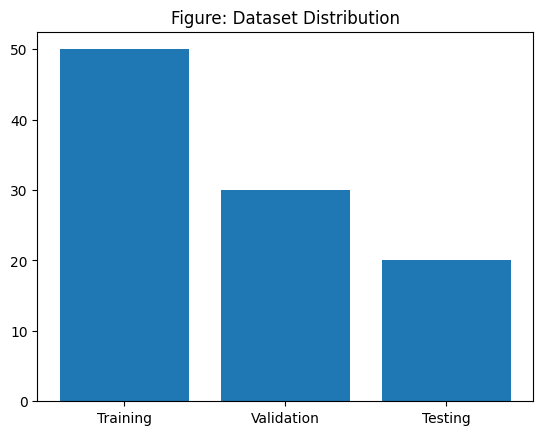
Machine learning relies on mathematical models, statistical techniques, and optimization algorithms. The primary objective is to construct a function that maps input data to the correct output while minimizing prediction errors. Training data plays a critical role in this process because the model learns from examples contained within the dataset.
A typical machine learning workflow involves several steps. These include data collection, data preprocessing, feature extraction, model training, model evaluation, and deployment. Each stage contributes to the accuracy and reliability of the final system.
Types of Machine Learning
Machine learning algorithms are generally categorized into three major learning paradigms.
Supervised Learning
Supervised learning is the most commonly used machine learning approach. In this method, the algorithm is trained using labeled data. Each training example contains both input variables and the corresponding correct output.
The model learns the relationship between input features and output labels so that it can predict results for unseen data. Supervised learning is widely used in tasks such as image classification, spam detection, and medical diagnosis.
Common supervised learning algorithms include:
Linear Regression
Logistic Regression
Decision Trees
Support Vector Machines
Neural Networks
These algorithms aim to minimize prediction error by adjusting model parameters during training.
Unsupervised Learning
Unsupervised learning differs from supervised learning because it uses datasets without labeled outputs. The objective of unsupervised learning is to discover hidden structures or patterns within the data.
Algorithms analyze similarities among data points and group them accordingly. This technique is useful for exploratory data analysis and discovering natural clusters within datasets.
Common unsupervised learning methods include:
K-Means Clustering
Hierarchical Clustering
Principal Component Analysis (PCA)
Autoencoders
These methods are often applied in areas such as customer segmentation, anomaly detection, and data compression.
Reinforcement Learning
Reinforcement learning is another important branch of machine learning. In this framework, an intelligent agent interacts with an environment and learns through trial and error.
The agent performs actions and receives rewards or penalties depending on the outcomes of those actions. Over time, the agent learns strategies that maximize cumulative rewards.
Reinforcement learning has been applied successfully in robotics, game playing, and autonomous navigation systems. One of the most well-known demonstrations of reinforcement learning was the development of AI systems capable of mastering complex board games and video games.
Key Components of Machine Learning Systems :-
- Machine learning systems rely on several essential components.
- Data is the most critical element because the quality and quantity of training data significantly influence the performance of the model.
- Features represent measurable attributes extracted from the data. Effective feature engineering often improves model accuracy.
- Models are mathematical structures that represent the relationship between inputs and outputs.
- Loss functions measure how far predictions deviate from actual values.
- Optimization algorithms adjust model parameters to minimize error during training.
Together, these elements form the foundation of machine learning systems used in modern artificial intelligence applications.
Equation 1: Linear Regression Model
y = w1*x1 + w2*x2 + ... + wn*xn + b
Chapter 4: Neural Network Architecture
Neural networks are computational models inspired by biological neural systems. They consist of interconnected processing units called neurons, which collectively process information and perform complex computations.
The concept of artificial neural networks is based on the observation that the human brain contains billions of neurons connected through synapses. Similarly, artificial neural networks simulate this structure through layers of artificial neurons that process input signals and generate outputs.
The field of neural networks is formally known as Artificial Neural Network research.
Basic Structure of Neural Networks
A typical neural network contains three main types of layers:
Input Layer
The input layer receives raw data from the external environment. Each neuron in the input layer represents a specific feature of the dataset.
For example, in an image recognition task, input neurons may correspond to individual pixel values.
Hidden Layers
Hidden layers perform intermediate computations that transform the input data into useful representations. These layers enable neural networks to detect complex patterns within data.
Deep neural networks often contain multiple hidden layers. The use of many hidden layers is a defining characteristic of Deep Learning systems.
Output Layer
The output layer produces the final prediction or classification result. The structure of the output layer depends on the specific task being performed.
For instance, a binary classification problem may use a single output neuron, while a multi-class classification problem may use several output neurons.
Neurons and Activation Functions
Each artificial neuron performs a simple mathematical operation. It receives input signals, multiplies them by weights, sums the results, and applies an activation function.
Activation functions introduce nonlinearity into the network, allowing it to learn complex relationships within data.
Common activation functions include:
Sigmoid Function
ReLU (Rectified Linear Unit)
Tanh Function
Softmax Function
These functions determine how neurons respond to incoming signals and influence the learning process of the network.
Equation 2: Neuron Activation Function
a = σ( Σ(w_i * x_i) + b )
Chapter 5: Training Algorithms and Optimization
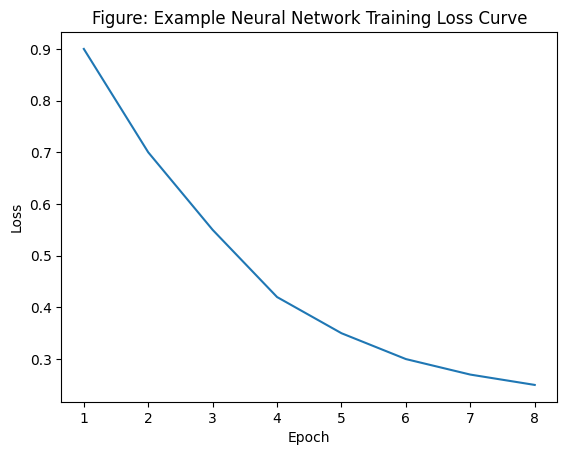
Training a neural network involves adjusting its internal parameters so that the network can accurately predict outputs for given inputs. This process is known as model training.
Training typically begins with randomly initialized weights. The model then processes input data and produces predictions. These predictions are compared with the correct outputs to compute an error value.
Forward Propagation
During forward propagation, input data passes through the network layer by layer until it reaches the output layer. Each neuron performs weighted computations and applies activation functions.
The final output represents the model’s prediction for that particular input.
Loss Functions
Loss functions quantify the difference between predicted outputs and actual values. The objective of training is to minimize this loss.
Common loss functions include:
Mean Squared Error
Cross-Entropy Loss
Hinge Loss
The choice of loss function depends on the type of problem being solved.
Backpropagation
The learning process in neural networks relies heavily on the algorithm known as Backpropagation.
Backpropagation calculates gradients of the loss function with respect to each network parameter. These gradients indicate how much each parameter contributes to the error.
The algorithm propagates error signals backward through the network, allowing the model to update weights in a way that reduces prediction errors.
Optimization Algorithms
Optimization algorithms are used to update model parameters based on computed gradients.
Common optimization methods include:
Gradient Descent
Stochastic Gradient Descent (SGD)
Adam Optimizer
RMSProp
These algorithms iteratively adjust the weights of the network until the model reaches an optimal or near-optimal state.
Efficient optimization is essential for training large neural networks used in modern artificial intelligence systems.
Equation 3: Gradient Descent Update Rule
θ = θ − η ∇J(θ)
Chapter 6: Applications of Machine Learning
Machine learning and neural networks have become integral components of modern technology. Their ability to analyze massive datasets and identify patterns has enabled innovations across numerous industries.
✓ Healthcare
Machine learning has transformed the healthcare sector by improving diagnostic accuracy and enabling early disease detection.
Neural networks can analyze medical images such as X-rays, CT scans, and MRI scans to identify abnormalities that may be difficult for human observers to detect.
Predictive models are also used to forecast disease progression and recommend personalized treatment plans.
✓ Autonomous Vehicles
Autonomous vehicles rely heavily on machine learning algorithms to interpret sensor data and navigate complex environments.
Companies such as Tesla and Waymo utilize neural networks to process data from cameras, radar systems, and LiDAR sensors.
These algorithms enable vehicles to detect pedestrians, recognize traffic signs, and make real-time driving decisions.
✓ Cybersecurity
Machine learning plays a critical role in detecting cyber threats and preventing unauthorized access to computer systems.
Security systems use anomaly detection algorithms to identify unusual patterns in network activity. These systems can quickly detect potential cyber attacks, malware infections, and fraudulent transactions.
Machine learning models continuously adapt to evolving threats, making them an essential tool in modern cybersecurity strategies.
✓ Space Exploration
The exploration of space generates enormous amounts of scientific data. Machine learning algorithms help researchers analyze this data efficiently.
Organizations such as NASA use machine learning techniques to classify galaxies, detect exoplanets, and analyze satellite imagery.
These technologies accelerate scientific discovery and enable deeper understanding of the universe.
Natural Language Processing
Natural language processing systems allow computers to understand and generate human language.
Applications include virtual assistants, translation systems, and text analysis tools. Modern NLP models rely heavily on neural network architectures capable of learning complex linguistic patterns.
Chapter 7: Challenges and Limitations
Despite their impressive capabilities, machine learning and neural networks face several challenges that limit their effectiveness.
One major issue is the requirement for large amounts of high-quality training data. Many machine learning algorithms perform poorly when trained on small or incomplete datasets.
Another challenge involves computational cost. Training deep neural networks requires significant processing power and memory resources, often involving specialized hardware such as GPUs and AI accelerators.
Interpretability is another important concern. Neural networks often operate as complex systems with millions of parameters, making it difficult to understand how they arrive at specific decisions. This lack of transparency can be problematic in critical applications such as healthcare and financial systems.
Bias in training data can also lead to unfair or inaccurate predictions. If datasets contain biases or imbalanced representation, the resulting models may inherit those biases.
Ethical concerns regarding privacy, surveillance, and the misuse of artificial intelligence technologies have also become major topics of discussion among researchers and policymakers.
Addressing these challenges will be essential for the responsible development of machine learning technologies in the future.
Chapter 8: Future Directions and Conclusion
Machine learning and neural networks continue to evolve rapidly as researchers develop more advanced algorithms and computational techniques.
Future developments in artificial intelligence are expected to focus on improving model efficiency, interpretability, and adaptability. Researchers are exploring methods that allow neural networks to learn with smaller datasets and require less computational power.
Another promising area is explainable artificial intelligence, which aims to make machine learning models more transparent and understandable. This development is particularly important for applications in medicine, law, and finance where trust and accountability are essential.
Edge computing is also expected to play a major role in the future of machine learning. Instead of relying solely on centralized cloud servers, machine learning models can run directly on devices such as smartphones, robots, and autonomous systems.
Advancements in neural network architectures may eventually lead to more generalized forms of artificial intelligence capable of performing a wide range of tasks with minimal human supervision.
In conclusion, machine learning and neural networks have become fundamental technologies driving the modern artificial intelligence revolution. Their ability to analyze
data, recognize patterns, and make intelligent decisions has enabled transformative innovations across industries.
Although challenges remain, ongoing research and technological progress continue to expand the capabilities of these systems. As computational resources grow and new algorithms emerge, machine learning will likely play an increasingly significant role in shaping the technological landscape of the future.
References (IEEE)
[1] T. Mitchell, Machine Learning, McGraw‑Hill, 1997.
[2] I. Goodfellow, Y. Bengio, A. Courville, Deep Learning, MIT Press, 2016.
[3] S. Russell and P. Norvig, Artificial Intelligence: A Modern Approach, Pearson, 2021.
[4] G. Hinton, 'Deep Neural Networks for Acoustic Modeling,' IEEE Signal Processing Magazine.
[5] Y. LeCun et al., 'Gradient-Based Learning Applied to Document Recognition,' Proc. IEEE.
[6] A. Krizhevsky et al., 'ImageNet Classification with Deep CNNs,' NIPS.
[7] D. Silver et al., 'Mastering the Game of Go with Deep Neural Networks,' Nature.
[8] C. Bishop, Pattern Recognition and Machine Learning, Springer.
[9] J. Schmidhuber, 'Deep Learning in Neural Networks,' Neural Networks.
[10] A. Ng, 'Machine Learning Yearning,' Stanford University.